90WNiFe Alloy Counterweight
1. What's 90WNiFe Alloy Counterweight?
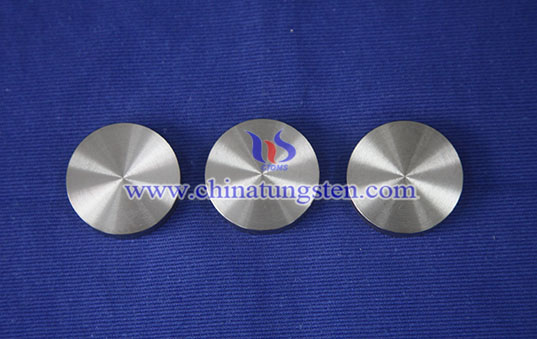
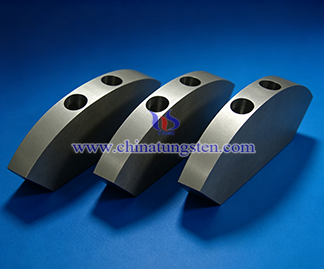
90WNiFe alloy counterweight is tungsten alloy counterweight with tungsten as the matrix and nickel and iron as the binder phase. Its typical composition is W 90%, Ni 7% and Fe 3%, and it is generally produced by powder metallurgy liquid-phase sintering. CTIA's 90WNiFe alloy counterweight is commonly used tungsten-nickel-iron alloy grade, offering high density, high strength, good ductility and weak ferromagnetism. It is suitable for general industrial counterweighting, inertial components and certain electromagnetic-related components.
2. Features of CTIA's 90WNiFe Alloy Counterweight
(1) High Density and Space Efficiency: Density is 16.85–17.25 g/cm³, requiring less volume for the same mass and making it suitable for concentrated counterweighting in confined installation spaces.
(2) High Strength and Good Ductility: Tensile strength is typically 750–850 MPa, reaching 950 MPa after strengthening, with 10–18% elongation and HB 280–320 hardness, supporting vibration and impact resistance during operation.
(3) Weak Ferromagnetism and Application Range: The iron content gives the alloy weak ferromagnetism, allowing it to be attracted by magnets. It is suitable for inertial components and structures where weak magnetic properties are acceptable. For non-magnetic applications such as MRI systems, W-Ni-Cu tungsten alloy is more suitable.
(4) Low Thermal Expansion and Dimensional Stability: The coefficient of thermal expansion is approximately 4.5–5.5 μm/m·°C, limiting dimensional variation with temperature and helping maintain counterweight position, assembly clearances and dynamic balance.
(5) X-Ray Attenuation and Functional Integration: Tungsten's high density and atomic number provide good attenuation of X-rays and γ-rays, allowing the counterweight to combine mass balancing with radiation shielding where required.
(6) Good Thermal Conductivity: Thermal conductivity is typically 120–140 W/(m·K), supporting heat transfer from the counterweight to adjacent structures in mechanical and precision equipment.
(7) Lead-Free and Cost Balance: The alloy contains no lead or radioactive materials, offering a lead-free option for high-density counterweighting while balancing material performance and cost.
3. Applications of CTIA's 90WNiFe Alloy Counterweight
(1) Industrial Machinery: Used in machine tool and boring bar counterweights, mold counterweights, automation balancing blocks, engineering machinery counterweights and vibration stabilizing components for mass compensation and center-of-gravity adjustment.
(2) Automotive and Racing: Used in crankshaft, flywheel, driveshaft and wheel balancing components to adjust mass distribution and reduce vibration in rotating systems.
(3) Aerospace: Used in helicopter blade and rotor counterweights, aileron balancing weights, gyroscope inertia blocks and aerospace instrument counterweights for compact mass distribution under rotational and vibration loads.
(4) Medical and Nuclear Equipment: Used in CT rotating structure counterweights, radiotherapy equipment and selected nuclear industry components, combining mass balancing with X-ray or γ-ray attenuation where required.
(5) Precision Instruments and Electronic Equipment: Used in precision instrument bases, vibration damping components, flywheel counterweights, pendulum clocks and mechanical watch balancing components to improve equipment stability and motion balance.
(6) Sports Equipment: Used in tennis racket, golf club and fishing equipment counterweights to adjust mass distribution, center of gravity and inertia characteristics.
(7) Oil and Gas Drilling Equipment: Used in downhole tool counterweights, drilling stabilization components and directional measurement tools for concentrated counterweighting in limited structural space.
4. Specifications of CTIA's 90WNiFe Alloy Counterweight
(1) Material: 90WNiFe tungsten alloy
(2) Composition: W approximately 90%, Ni approximately 7%, Fe approximately 3%
(3) Density: 16.85–17.25 g/cm³
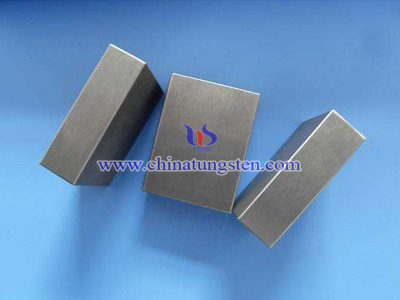
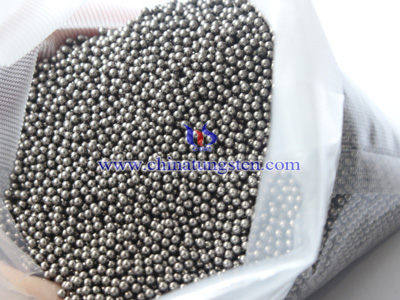
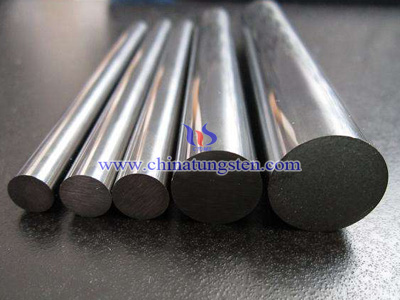
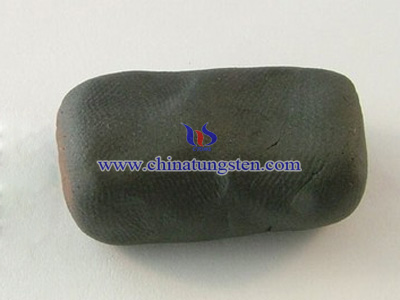
(4) Structural Forms: Counterweight rods, blocks, plates, rings and irregular counterweight parts
(5) Dimensions: Custom sizes
(7) Surface Condition: Ground or polished
CTIA GROUP (CTIA) has nearly 30 years of experience in tungsten alloy manufacturing, with capabilities in powder preparation, pressing, liquid-phase sintering, precision machining and quality inspection. CTIA applies process control from powder preparation to final machining to maintain consistent composition, density and dimensional accuracy. CTIA's 90WNiFe alloy counterweights are available as rods, blocks, plates, rings and irregular parts in various dimensions and machining specifications for machine tools, automotive crankshafts and flywheels, aerospace rotating components, precision instruments and other applications.
For any inquiry, please contact tungsten alloy manufacturer: CTIA GROUP
Email: sales@chinatungsten.com
Tel: 0086 592 5129696 / 0086 592 5129595
Website: tungsten-alloy.com
WeChat:

Related Products: