W-Ni-Cu Tungsten Alloy Counterweight
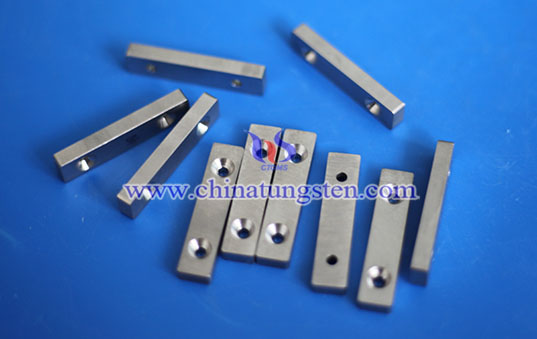
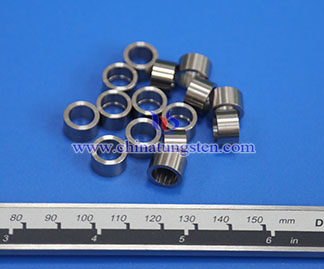
1. What's W-Ni-Cu Tungsten Alloy Counterweight?
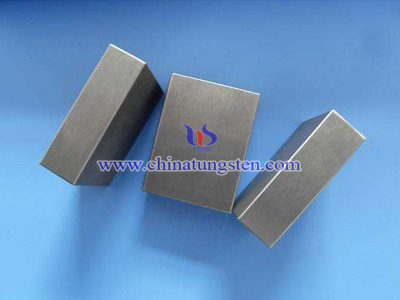
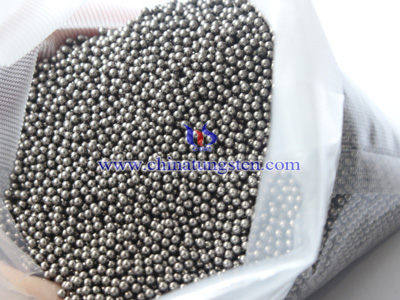
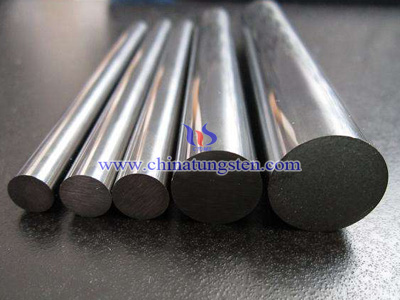
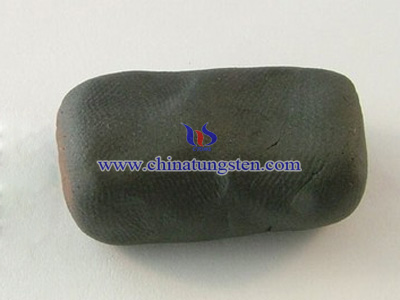
W-Ni-Cu tungsten alloy counterweight is high-density counterweight component made primarily of tungsten, with nickel and copper as the binder phase, typically produced by powder metallurgy liquid-phase sintering. CTIA's W-Ni-Cu tungsten alloy counterweight is used for equipment center-of-gravity adjustment, mass compensation, inertia control and dynamic balancing in medical equipment, aerospace systems, precision instruments, electronic devices and ocean engineering equipment. Shapes, dimensions and machining tolerances can be customized according to equipment structure and counterweight requirements.
2. Features of CTIA's W-Ni-Cu Tungsten Alloy Counterweight
(1) Non-Magnetic and Strong-Field Compatible: Contains no ferromagnetic phase, with magnetic permeability close to 1. It is less likely to cause significant magnetic interference in strong magnetic field environments, making it suitable for equipment with high magnetic field stability requirements such as Magnetic Resonance Imaging (MRI).
(2) High Density and Space-Saving: Density is approximately 16.5–18.75 g/cm³, more than twice that of ordinary steel, enabling greater counterweight mass within limited installation space and suitable for compact equipment.
(3) Electrical and Thermal Conductivity: The copper binder phase helps improve the electrical and thermal conductivity of the material, meeting the requirements of certain counterweight structures with heat dissipation or electrical conductivity requirements.
(4) Low Thermal Expansion and Dimensional Stability: The coefficient of thermal expansion is approximately 1/2–1/3 that of iron and steel. Low thermal expansion limits dimensional variation with temperature, supporting stable counterweight positioning and precise assembly.
(5) Corrosion Resistance and Environmental Adaptability: Compared with iron-containing W-Ni-Fe tungsten alloy, W-Ni-Cu tungsten alloy counterweight offers better corrosion resistance in air, humidity and certain corrosive environments, making it suitable for equipment with higher environmental adaptability requirements.
(6) Radiation Shielding Capability: Tungsten has an atomic number of 74 and provides good attenuation of X-rays and γ-rays, allowing the counterweight to also serve a radiation shielding function while providing mass balance.
(7) Good Machinability and Precision Processing: Supports turning, milling, grinding, drilling and tapping to meet structural processing requirements such as holes, slots and steps.
(8) Moderate Strength and Material Stability: Tensile strength is approximately 700–900 MPa. The alloy is generally not strengthened through heat treatment and is more suitable for counterweight applications requiring corrosion resistance and dimensional stability.
3. Applications of CTIA's W-Ni-Cu Tungsten Alloy Counterweight
(1) Medical: Used in Magnetic Resonance Imaging (MRI) equipment for counterweighting, position adjustment and structural balancing, as well as in Computed Tomography (CT) equipment for components requiring both mass balancing and structural support.
(2) Aerospace: Used in gyro rotors, aircraft inertial navigation, satellite attitude control and aero-engine related balancing components, with higher requirements for non-magnetism, high density and dimensional stability.
(3) Electronics: Used in electronic devices, electro-vacuum devices and structural components sensitive to magnetic field interference, achieving mass configuration and space optimization through non-magnetism and high density.
(4) Electrical and Electrical Processing: Used in high-voltage electrical equipment for counterweighting and certain electrical contact and electrode structures, leveraging the electrical conductivity and dimensional stability of W-Ni-Cu alloy to meet specific operating conditions.
(5) Precision Instruments: Used in dynamic balancing of miniature counterweights, calibration blocks, centrifuges and turbomolecular pumps to reduce vibration by precisely adjusting mass and mass distribution.
(6) Ocean Engineering: Used as counterweight and ballast components in deep-sea equipment, marine instruments and underwater equipment, where high density and corrosion resistance support stable operation in humid and marine environments.
(7) Ships and Special Equipment: Used in submarine counterweights, missile balancing parts and other components with special requirements for high density, non-magnetism and structural dimensions.
4. Specifications of CTIA's W-Ni-Cu Tungsten Alloy Counterweight
(1) Materials: W-Ni-Cu alloy
(2) Tungsten Content: 85%–99%
(3) Density: 16.5–18.75 g/cm³
(4) Common Grades: W90NiCu, W93NiCu, W95NiCu, W97NiCu
(5) Product Forms: Tungsten alloy rods, plates, sheets, blocks, rings, discs, sleeves and irregular customized parts
(6) Dimensions: Customizable
(7) Machining Condition: Turned, ground or polished
CTIA GROUP (CTIA) has been deeply engaged in tungsten alloy manufacturing for nearly 30 years, with capabilities in powder metallurgy and precision machining. Based on equipment space, target mass, magnetic field conditions and dimensional tolerances, CTIA offers suitable W-Ni-Cu alloy grades and machining solutions, with controlled material composition, sintering quality and machining precision. Counterweight rods, plates, sheets, blocks, rings and irregular parts are available in customized dimensions to meet different equipment requirements for non-magnetic properties, mass distribution and assembly precision.
For any inquiry, please contact tungsten alloy manufacturer: CTIA GROUP
Email: sales@chinatungsten.com
Tel: 0086 592 5129696 / 0086 592 5129595
Website: tungsten-alloy.com
WeChat:

Related Products: