95WNiCu Alloy Counterweight
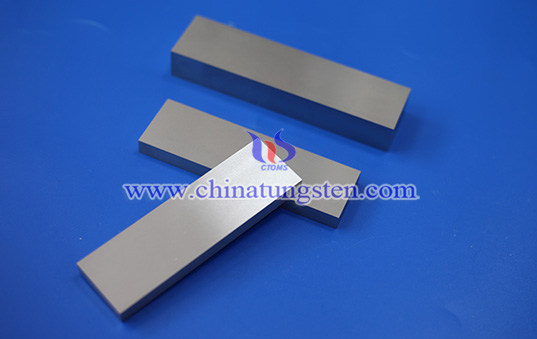
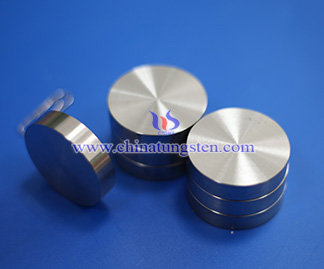
1. What's 95WNiCu Alloy Counterweight?
95WNiCu alloy counterweight is tungsten alloy counterweight containing approximately 95% W, 3.5% Ni and 1.5% Cu, typically produced by powder metallurgy. CTIA's 95WNiCu alloy counterweight has a density of 17.8–18.3 g/cm³ and relative magnetic permeability close to 1, combining compact mass distribution with low magnetic response for equipment requiring precise counterweighting in space-constrained and magnetically sensitive environments.
2. Features of CTIA's 95WNiCu Alloy Counterweight
(1) High Tungsten Content, High Density: Tungsten content is approximately 95%, with density reaching 17.8–18.3 g/cm³, allowing greater counterweight mass within the same installation space and meeting higher volume compression requirements than 90WNiCu counterweights.
(2) Non-Magnetic, Low Magnetic Response: Nickel and copper serve as the binder phase without ferromagnetic iron, giving relative magnetic permeability close to 1 and minimizing magnetic response in strong magnetic fields.
(3) Flexible Mass Distribution, Precise Adjustment: Counterweight mass distribution can be adjusted through external dimensions, installation position and eccentricity for dynamic balancing of rotating components and center-of-gravity correction of static mechanisms.
(4) Good Corrosion Resistance, Long-Term Stability: The copper-based binder phase provides good corrosion resistance and reduces rust-related issues associated with iron-containing materials, supporting long-term installation in precision equipment and mechanical structures.
3. Applications of CTIA's 95WNiCu Alloy Counterweight
(1) Precision Instruments: Applied in magnetic field detection and precision testing equipment for mass compensation and center-of-gravity adjustment without magnetic interference.
(2) Aerospace: Used in gyroscope rotors, inertial measurement units and drone balancing components to adjust inertia distribution and mass balance within limited space.
(3) Industrial Machinery: Applied in motor rotors, robotic arm joints and motion platforms to configure mass and position for dynamic balancing and operational stability.
(4) Medical Equipment: Used in motion components and load-bearing mechanisms of Magnetic Resonance Imaging (MRI) equipment for mass compensation and position balancing in magnetic field environments.
(5) Automotive Manufacturing: Applied in wheels, transmission components and engine motion assemblies to adjust mass distribution and improve rotational balance.
(6) Precision Motion Equipment: Used in precision positioning platforms, instrument motion components and actuators to control center of gravity and motion inertia with compact counterweights.
4. Specifications of CTIA's 95WNiCu Alloy Counterweight
(1) Tungsten Content: Approximately 95%
(2) Density: 17.8–18.3 g/cm³
(3) Magnetic Properties: Non-magnetic, relative magnetic permeability close to 1
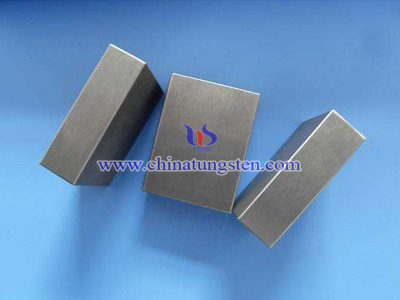
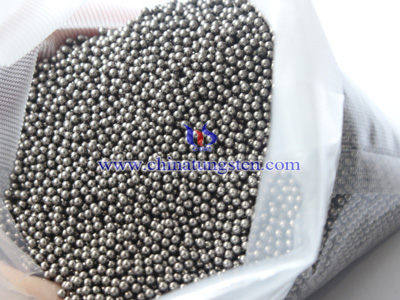
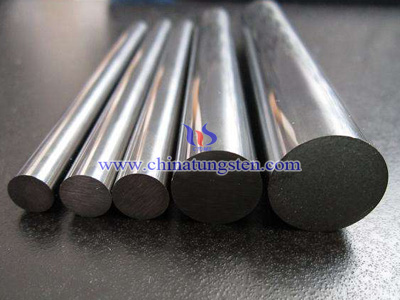
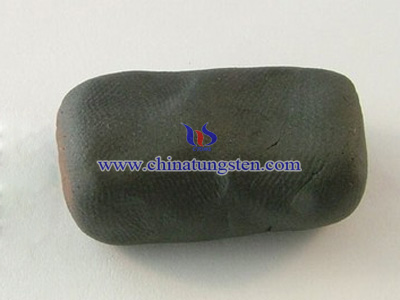
(4) Product Forms: Counterweight rods, blocks, balls, rings, screws and irregular parts
(5) Dimensions: Customizable
(6) Surface Condition: Precision-ground, polished, customizable
With nearly 30 years of tungsten alloy manufacturing experience, CTIA GROUP (CTIA) provides integrated capabilities from material preparation and powder metallurgy forming to liquid-phase sintering and precision machining. CTIA offers 95WNiCu alloy counterweights with controlled composition and density, precise dimensions and tolerances, and customized assembly holes, slots and individual weights for aerospace, robotics, precision machinery and industrial equipment applications.
For any inquiry, please contact tungsten alloy manufacturer: CTIA GROUP
Email: sales@chinatungsten.com
Tel: 0086 592 5129696 / 0086 592 5129595
Website: tungsten-alloy.com
WeChat:

Related Products: