93WNiFe Alloy Counterweight
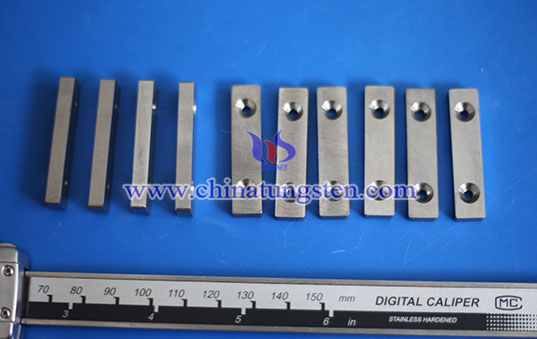
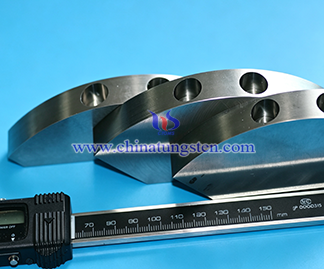
1. What's 93WNiFe Alloy Counterweight?
93WNiFe alloy counterweight is tungsten alloy counterweight with tungsten (W) as the matrix and nickel (Ni) and iron (Fe) as the binder phase. It contains approximately 93% W, 4.2% Ni and 2.8% Fe and is produced by powder metallurgy liquid-phase sintering. CTIA's 93WNiFe alloy counterweight concentrates a relatively large mass within limited space while maintaining good strength and ductility, making it suitable for counterweighting applications in machinery, automotive systems, aerospace and precision structures.
2. Features of CTIA's 93WNiFe Alloy Counterweight
(1) High Density: Density is 17.35–17.75 g/cm³, approximately 2.3 times that of steel. The same counterweight mass requires less space, suitable for space-constrained counterweighting and balancing structures.
(2) High Strength: Tensile strength can reach 800–1000 MPa and can be further increased through strain hardening, supporting resistance to inertial loads, vibration and sustained stress during equipment operation.
(3) Good Vibration Resistance: Liquid-phase sintering and subsequent densification treatment result in a uniform internal structure, supporting structural stability under long-term vibration and rotational conditions for vibration equipment and high-speed moving components.
(4) Good Machinability: The alloy supports precision turning, milling, drilling, tapping and grinding, with holes, slots, steps and irregular profiles machinable to meet required assembly dimensions.
(5) Dimensional Stability: The coefficient of thermal expansion is approximately 5.5 × 10⁻⁶/K at 20–300°C, keeping dimensional changes small as temperature varies and helping maintain the designed counterweight dimensions and installation position.
3. Applications of CTIA's 93WNiFe Alloy Counterweight
(1) Industrial Machinery: Used in vibrating screen counterweights, conveyor counterweights, machine tool counterweights, mold balancing blocks and automation equipment counterweights.
(2) Automotive and Racing: Used in crankshaft counterweights, flywheel counterweights, driveshaft balancing weights and wheel balancing weights.
(3) Aerospace: Used in aircraft control surface counterweights, rotor counterweights, gyroscope rotor counterweights and aerospace inertia weights.
(4) Precision Instruments: Used in instrument base counterweights, flywheel counterweights, precision balancing components and motion mechanism counterweights.
(5) Oil and Gas Drilling: Used in downhole tool counterweights, logging instrument counterweights and drilling stabilization components.
(6) Sports Equipment: Used in golf club head weights, tennis racket counterweights and fishing equipment counterweights.
4. Specifications of CTIA's 93WNiFe Alloy Counterweight
(1) Material System: 93WNiFe tungsten alloy
(2) Composition: W approximately 93%, Ni + Fe approximately 7%
(3) Density: 17.35–17.75 g/cm³
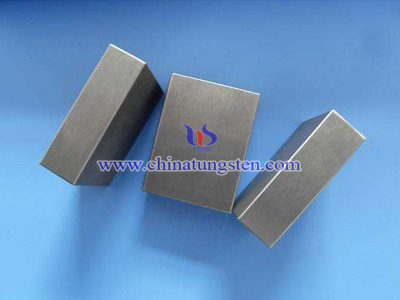
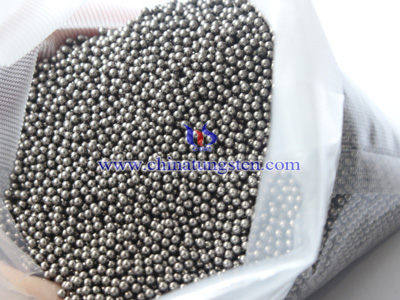
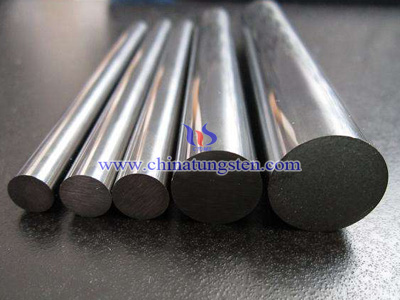
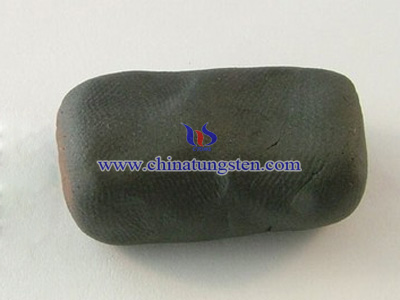
(4) Geometric Forms: Tungsten alloy plates, blocks, rods, rings and irregular customized counterweight parts
(5) Dimensions: Custom sizes available
CTIA GROUP (CTIA) has nearly 30 years of experience in tungsten alloy manufacturing, with capabilities in powder preparation, pressing, liquid-phase sintering, precision machining and quality inspection. CTIA controls composition, density, dimensions and machining accuracy to ensure consistent tungsten alloy counterweight quality. CTIA's 93WNiFe alloy counterweights can be customized as plates, blocks, rods, rings and irregular parts in various dimensions and machining specifications for machine tools, automotive crankshafts and flywheels, aerospace rotating components and precision instruments.
For any inquiry, please contact tungsten alloy manufacturer: CTIA GROUP
Email: sales@chinatungsten.com
Tel: 0086 592 5129696 / 0086 592 5129595
Website: tungsten-alloy.com
WeChat:

Related Products: