Tungsten Alloy Resonance-Control Counterweight
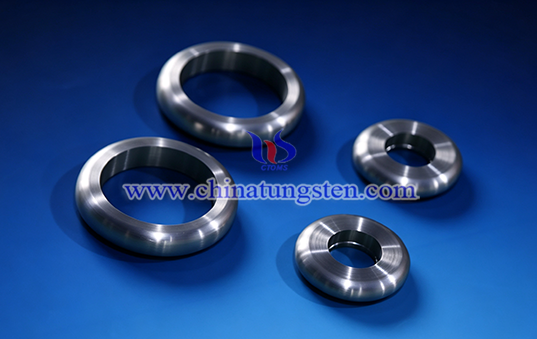
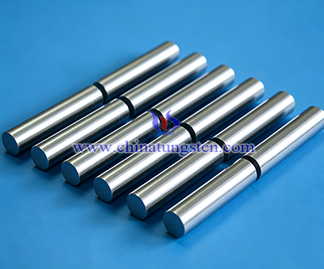
1. What's Tungsten Alloy Resonance-Control Counterweight?
Tungsten alloy resonance-control counterweight is high-specific-gravity balance weight made primarily of tungsten with nickel, iron, or copper as alloying elements. CTIA's tungsten alloy resonance-control counterweight uses high density of tungsten alloy to achieve the required mass in a compact form and adjusts mass distribution to control the dynamic response of the structure. By shifting the operating frequency away from the structural natural frequency, it helps reduce vibration amplitude near resonance. It is suitable for rotating machinery, engines, aerospace equipment, precision instruments, and other structures requiring controlled vibration response.
2. Features of CTIA's Tungsten Alloy Resonance-Control Counterweight
(1) High Density and Large Inertia: Density is typically 16.7–18.8 g/cm³, approximately 2.1–2.4 times that of steel, enabling greater counterweight mass within limited space to achieve mass regulation and inertia compensation.
(2) Mass Regulation and Precise Balancing: By adjusting counterweight mass, installation position and mass distribution, the inertial characteristics of rotating or motion systems can be changed to help reduce unbalanced forces and vibration responses under specific operating conditions.
(3) High Strength and Fatigue Resistance: Tensile strength can typically reach 700–1200 MPa, offering good load-bearing, impact resistance and fatigue resistance, suitable for continuous vibration and high-frequency motion environments.
(4) Good Thermal Stability and Dimensional Stability: Coefficient of thermal expansion is approximately 4.5–6.0×10⁻⁶/°C. Low thermal deformation helps maintain dimensional accuracy, assembly fit, and structural stability under temperature variation.
(5) High Machining Precision and Easy Forming: Supports turning, milling, grinding, drilling and tapping.
(6) Lead-Free and Environmentally Friendly: Contains no lead or radioactive materials and can replace lead counterweights in applications where lead-free materials and environmental considerations are required.
3. Applications of CTIA's Tungsten Alloy Resonance-Control Counterweight
(1) Automotive and Engines: Used in crankshafts, flywheels, drive shafts and other rotating components to adjust mass distribution and reduce rotational imbalance and torsional vibration.
(2) Aerospace: Used in aircraft control surfaces, helicopter rotors, aero-engines and satellite attitude mechanisms to adjust local mass and reduce flutter and vibration responses.
(3) Precision Instruments and Inertial Systems: Used in gyroscope rotors, inertial navigation components, optical platforms and precision motion mechanisms to precisely configure mass and improve rotational balance and operational stability.
(4) Industrial Machinery: Used in vibrating screens, crushers, compressors, rotors and other motion equipment to adjust counterweight mass and position, reducing operational vibration and mechanical impact.
(5) Rail Transit: Used in high-speed trains, rail vehicles and pantographs for mass balancing and vibration control to improve operational stability.
(6) Medical Equipment: Used in CT (Computed Tomography) rotating components, radiotherapy equipment rotating gantries and other motion structures for mass balancing while also providing certain radiation attenuation effects.
(7) Ships and Ocean Engineering: Used in ship shafting, underwater equipment and marine structures for mass balancing and vibration control to reduce vibration caused by rotational imbalance and fluid excitation.
4. Specifications of CTIA's Tungsten Alloy Resonance-Control Counterweight
(1) Materials: W-Ni-Fe alloy, W-Ni-Cu alloy
(2) Tungsten Content: Typically 90%–97%
(3) Density: 16.7–18.8 g/cm³
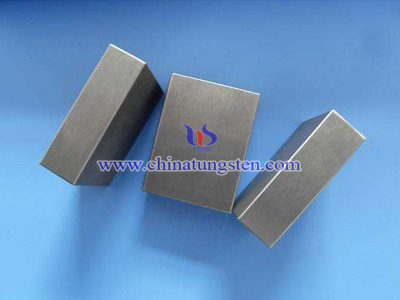
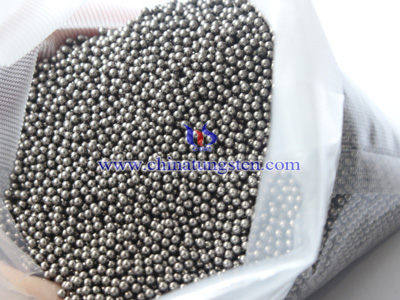
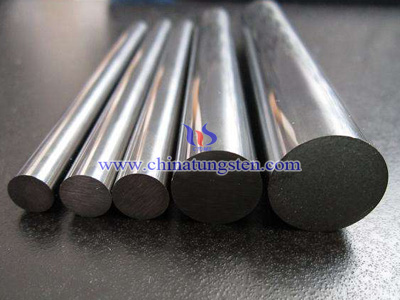
(4) Product Forms: Bars, cylinders, blocks, discs, rings and irregular counterweight parts
(5) Dimensions: Customizable
With nearly 30 years of experience in tungsten alloy manufacturing, CTIA GROUP provides tungsten alloy counterweights in grades including 90WNiFe, 93WNiFe, 95WNiFe, 97WNiFe, and W90NiCu, with structural design and precision machining based on the required counterweight mass, installation space, structural configuration, and dimensional specifications. CTIA provides customized solutions for regulating mass distribution and controlling vibration in rotating machinery, engines, aerospace equipment, precision instruments, and other vibration-sensitive systems.
For any inquiry, please contact tungsten alloy manufacturer: CTIA GROUP
Email: sales@chinatungsten.com
Tel: 0086 592 5129696 / 0086 592 5129595
Website: tungsten-alloy.com
WeChat:

Related Products: