Tungsten Alloy Centrifuge Counterweight
1. What's Tungsten Alloy Centrifuge Counterweight?
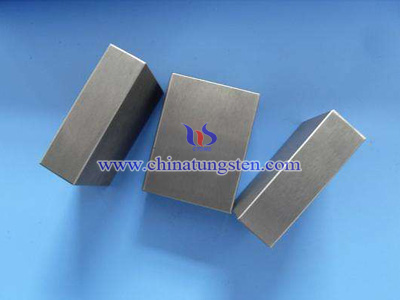
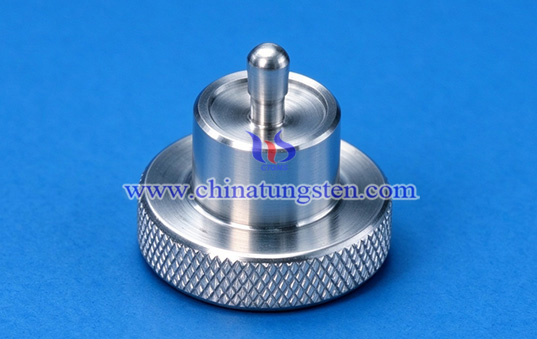
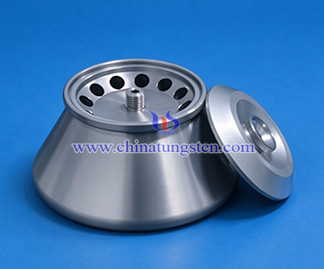
Tungsten alloy centrifuge counterweight refers to a mass-balancing component used in centrifuge rotors and related rotating assemblies. Its mass is configured to meet the mass distribution and rotational balance requirements of these assemblies. CTIA's tungsten alloy centrifuge counterweight is made from tungsten-nickel-iron (W-Ni-Fe) or tungsten-nickel-copper (W-Ni-Cu) alloy. The high density of tungsten alloy allows substantial mass to be concentrated in a compact volume, minimizing the space occupied by the counterweight and providing flexibility in adjusting the mass distribution of rotor assemblies.
2. Features of CTIA's Tungsten Alloy Centrifuge Counterweight
(1) High Density, Compact Size: With a density of approximately 16.5–18.8 g/cm³, tungsten alloy provides substantial mass within limited space, making it suitable for compact centrifuge rotor designs.
(2) Flexible Mass Configuration: Adjust the counterweight's mass, shape, and dimensions to suit rotor structures and balancing requirements across different centrifuge designs.
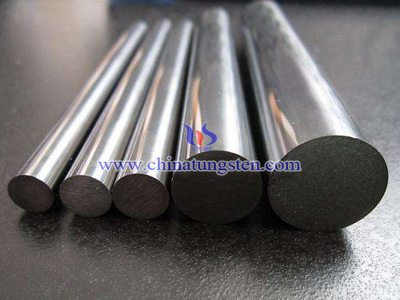
(3) Adaptable Structural Design: Configure cylindrical, block-shaped, or custom geometries, with holes, threads, and mounting interfaces positioned to suit the installation location.
(4) Controlled Dimensional Accuracy: Use precision machining processes such as turning, drilling, and grinding to achieve the required accuracy for critical dimensions and mounting features.
(5) Dimensional Stability: Tungsten alloy has a relatively low coefficient of thermal expansion, limiting dimensional changes caused by temperature variations and helping maintain counterweight stability.
(6) Choice of Magnetic Properties: W-Ni-Fe alloy exhibits magnetic properties, while W-Ni-Cu alloy is generally non-magnetic or has a low magnetic response. Select the material according to the surrounding magnetic-sensitive components and operating environment of the centrifuge.
3. Applications of CTIA's Tungsten Alloy Centrifuge Counterweight
(1) Laboratory Centrifuges: Used in rotors and related assemblies of laboratory centrifuges to adjust mass distribution and meet the operating requirements of different laboratory systems.
(2) Industrial Centrifuges: Installed in rotating assemblies of industrial separation equipment to suit different rotor layouts and mounting requirements.
(3) Medical Centrifuges: Used in rotating assemblies of clinical testing and sample-processing equipment to meet requirements for counterweight accuracy and assembly stability.
(4) Pharmaceutical and Biotechnology Equipment: Integrated into centrifuge assemblies used in production and laboratory equipment, accommodating different structural designs and mass-balancing requirements.
(5) Chemical Separation Equipment: Used in centrifugal separation systems for chemical processing, meeting counterweight installation and mass distribution requirements during continuous operation.
4. Specifications of CTIA's Tungsten Alloy Centrifuge Counterweight
(1) Materials: W-Ni-Fe and W-Ni-Cu tungsten alloys
(2) Tungsten Content: Typically 90%–97%
(3) Density: Approximately 16.5–18.8 g/cm³
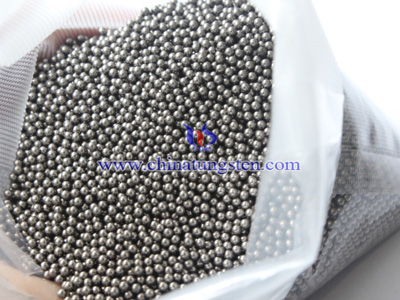
(4) Product Forms: Cylinders, counterweight blocks, and other customizable shapes
(5) Dimensions: Customizable
(6) Surface Treatment: Polishing, knurling, and other customizable finishes
CTIA GROUP (CTIA) has nearly 30 years of experience in tungsten alloy manufacturing, with expertise in powder metallurgy and precision machining. CTIA provides structural design and customized machining solutions for centrifuge counterweights, tailored to rotor geometry, balancing requirements, and assembly conditions across laboratory, industrial, and medical centrifuges, as well as pharmaceutical and chemical processing equipment.
For any inquiry, please contact tungsten alloy manufacturer: CTIA GROUP
Email: sales@chinatungsten.com
Tel: 0086 592 5129696 / 0086 592 5129595
Website: tungsten-alloy.com
WeChat:

Related Products: